


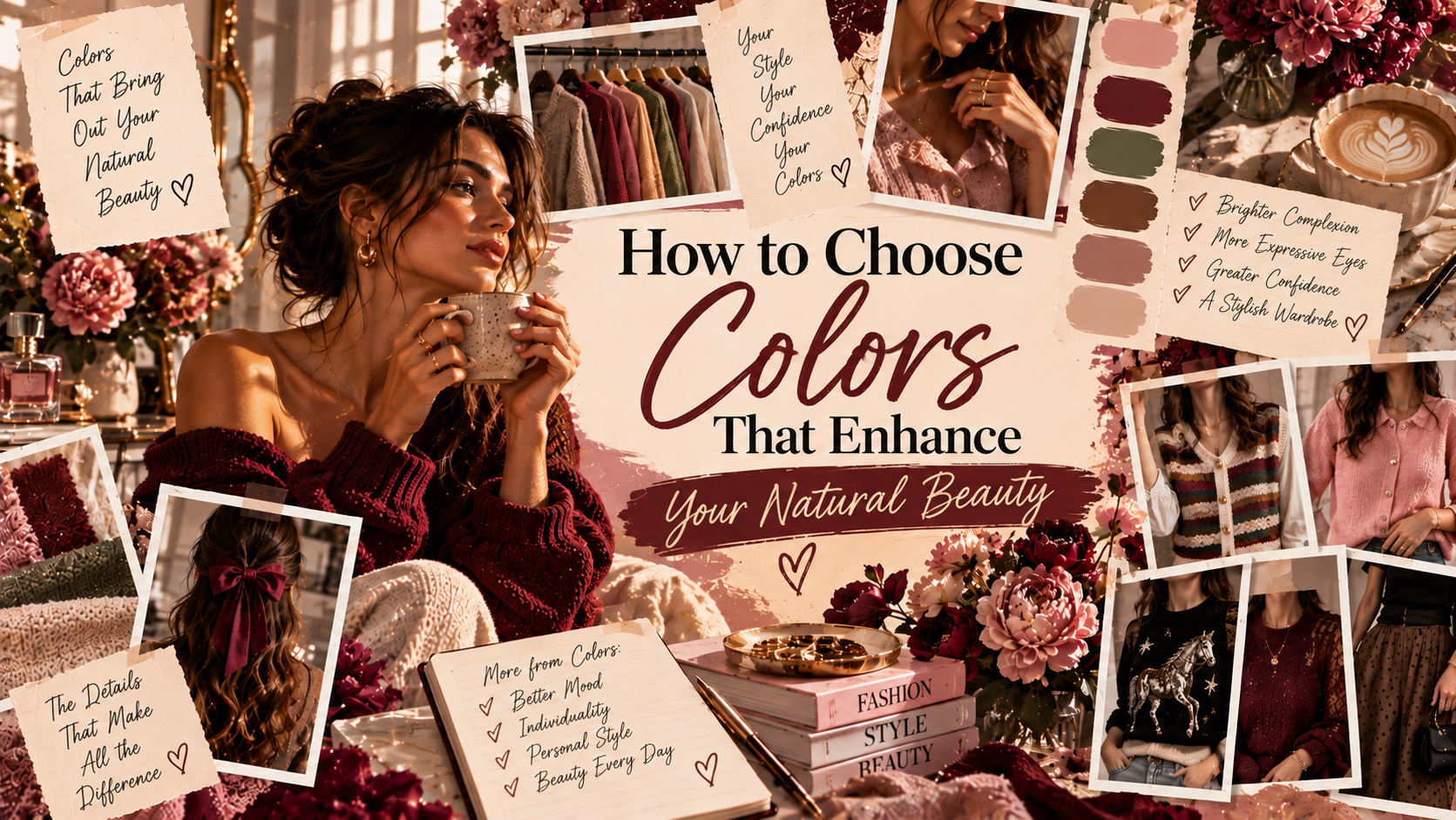
Have you ever put on an outfit you really love, only to feel that something about your look isn't quite right? And then, on another day, you wear a simple sweater in just the right shade, and suddenly your complexion looks brighter, your eyes stand out, and you feel more confident.
The secret isn't about following every fashion trend or wearing only certain colors. It's about discovering the shades that harmonize with your natural features and reflect your personal style.
Here's how to do it easily, without having to replace your entire wardrobe.
1. Start by Understanding Your Skin's Undertone
One of the most helpful guides when choosing colors is your skin's undertone. It can be warm, cool, or neutral, and it isn't the same as having fair or dark skin.
-
Warm undertones: Your skin may have golden, peachy, or yellowish hues. Colors such as camel, chocolate brown, olive green, cream, and terracotta can create beautiful harmony.
-
Cool undertones: Your skin may have pinkish or bluish hues. Burgundy, cool pink, blue, lavender, and certain shades of gray can complement your natural features.
-
Neutral undertones: If your skin doesn't appear distinctly warm or cool, you may find that you can experiment successfully with both color families.
These are helpful guidelines, not strict rules. The best test is to hold different colors near your face in natural daylight and notice which ones make your complexion look fresher and more even.
2. Use Your Eye and Hair Color as Inspiration
The colors we wear close to our faces can create beautiful contrast or bring out our natural features.
If you have brown eyes, try chocolate brown, olive green, navy, and burgundy. Blue eyes can look striking alongside warm brown tones, cream, navy, and soft pink. Green eyes often stand out beautifully against burgundy, plum, dusty pink, and certain earthy shades.
Your hair color can also offer inspiration. Caramel and golden hair tones can pair beautifully with warm neutrals, while ash-toned hair can look wonderful with cooler colors.
Everything doesn't need to match perfectly. Sometimes, contrast is exactly what makes an outfit interesting.
3. Discover the Neutrals You'll Wear Again and Again
Neutral colors are the foundation of a versatile wardrobe because they're easy to combine and allow you to create different outfits with fewer pieces.
Some of the most versatile choices include black, white, cream, gray, navy, and brown. However, finding the right shade matters. Soft cream may look more harmonious on you than bright white, while chocolate brown may feel softer than deep black.
For an everyday look with an interesting detail, try these brown wide-leg trousers with black polka dots and an elastic waistband. The brown creates a warm base, while the black dots add personality. Pair them with a black, cream, or beige top for a stylish outfit without using too many colors.
4. Don't Be Afraid of Pink
Pink isn't just a romantic or girly color. Depending on the shade, it can look soft, modern, elegant, or even bold.
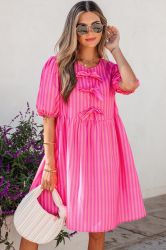
Dusty pink is a lovely choice for a refined, understated look. Brighter pink adds energy and draws attention, while peachy pink shades can work beautifully with warm colors.
If you want to introduce more color into your wardrobe without sacrificing versatility, take a look at this pink waffle-textured blouse with snap buttons. Pair it with jeans, black trousers, or a neutral skirt. Pink then becomes an accent that refreshes your entire outfit.
5. Use Multicolored Pieces to Discover New Combinations
You don't have to be a stylist to combine several colors. One of the easiest tricks is to choose a multicolored piece and use one of its shades as the starting point for the rest of your outfit.
For example, this multicolored striped knitted vest with buttons can become the focal point of your look. Choose trousers in one of its colors, or stick to black, white, or denim to let the pattern stand out.
The same approach works with this color-block sweater with striped sleeves. When a garment already combines several colors and patterns, keeping the rest of your outfit simple helps create a balanced result.
A little styling trick: Choose one main color, one complementary color, and, if you like, one small accent. This keeps your outfit balanced, even when you're experimenting with bolder shades.
6. Give Burgundy and Dark Shades a Chance
It's easy to assume that dark colors are only suitable for winter or formal occasions. In reality, they can add depth and character to your everyday wardrobe.
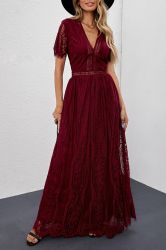
Burgundy is a perfect example. It feels elegant and pairs beautifully with black, gray, cream, denim, and certain shades of brown. If you love expressive colors but don't necessarily want to wear bright shades, burgundy may be the perfect compromise.
This burgundy sweater with lace detailing and raglan sleeves shows how a rich shade can bring sophistication to an outfit. Pair it with black trousers for a more polished look or denim for relaxed everyday styling.
If you prefer a bolder aesthetic, this black knitted sleeveless top with a horse and Western-inspired motifs could be an interesting choice. Black provides a classic foundation, while the motifs add individuality without requiring lots of additional colors.
7. Choose Colors That Reflect the Mood You Want to Express
Colors aren't just about appearance. They can also be a way to express your mood, personality, and how you want to feel throughout the day.
-
Cream and beige: For a soft, calm, timeless look.
-
Brown: For warmth and a naturally elegant feel.
-
Burgundy: For depth and sophistication.
-
Pink: For freshness and softness, or a confident pop of color.
-
Black: For contrast, a defined silhouette, and a classic feel.
-
Blue: For a balanced look that can feel both casual and refined.
You don't need to commit to just one style or mood. You can choose different colors depending on the occasion, the season, and how you feel.
8. How Can You Tell If a Color Really Suits You?
The next time you try on a new piece of clothing, pay attention to a few details:
-
Does your complexion look fresh and even?
-
Do you notice your face first, or does the color seem to overpower it?
-
Does the shade bring out your eyes and hair in a way you like?
-
Do you feel confident and comfortable when you look in the mirror?
Whenever possible, try clothes in natural daylight. Store lighting can sometimes change how we perceive colors.
And remember: you don't have to completely avoid a color just because it may not be your most flattering choice near your face. You can still wear it in trousers, skirts, shoes, bags, or accessories.
9. Create Your Own Personal Color Palette
You don't need to know every rule of color theory. Start with three simple steps:
-
Choose three neutral colors that you love and can easily combine.
-
Add two or three favorite accent colors that express your personality.
-
Check how they work with the clothes you already own before buying anything new.
Over time, you'll build a wardrobe where more pieces work together, making it easier to decide what to wear in the morning.
Beauty Isn't Defined by a Single Color
The best colors are the ones that make you feel good in your own skin. Your skin's undertone, eye color, and hair color can offer useful guidance, but don't let any set of rules limit your style.
Experiment, try new combinations, and pay attention to how you feel. Sometimes, the most beautiful outfit doesn't come from wearing the color you're supposed to wear according to the rules, but from wearing the one you feel confident in.