


Have you ever stood in front of a wardrobe full of clothes and still thought, “I have nothing to wear”? Or fallen in love with a piece of clothing online, only to discover that it doesn't look quite the way you imagined once you put it on?
This is completely normal. The problem is often not the clothing itself, but the cut, proportions, fabric and the way we combine it with other pieces.
Modern styling advice increasingly focuses on using clothes according to your own proportions and personal style rather than following strict rules about what is “right” or “wrong” for a particular body shape.
So instead of asking yourself what you “should” wear, start with a different question: What do I want to achieve with this outfit?
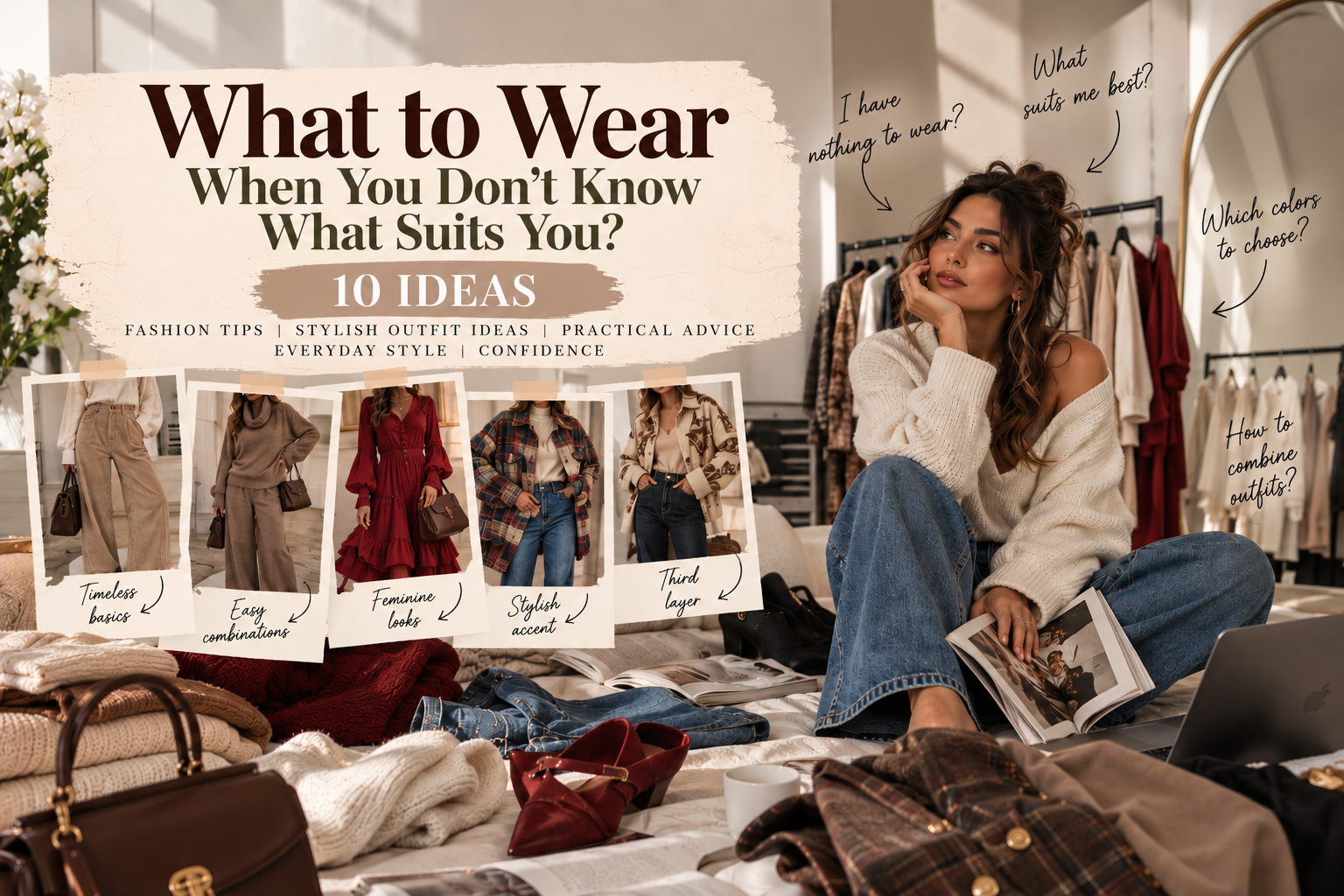
Here are 10 easy ideas that can help you choose your clothes with more confidence.
1. Start with a Piece You Truly Love
When you don't know what suits you, don't start by thinking about the entire outfit.
Choose one piece that you really want to wear – for example, your favorite trousers, dress, shirt or jacket – and build the rest of the outfit around it.
This is one of the easiest ways to reduce the confusion in front of your wardrobe. Instead of thinking about five different pieces at once, you start with one foundation and gradually add the rest.
For example:
If you want to wear a colorful shirt, let it be the statement piece. The rest of the outfit can be more understated.
One interesting piece + neutral basics = an easy and balanced outfit.
2. When You Don't Know What Suits You, Start with Neutral Colors
Neutral colors are a wonderful starting point because they allow for countless combinations.
Beige, cream, black, white, brown, grey and denim can become the foundation of a huge number of outfits.
Beige Cotton Corduroy Trousers
Beige trousers are a great example of a versatile foundation.
You can combine them with:
- a white shirt;
- a black sweater;
- a burgundy blouse;
- a green cardigan;
- a brown jacket;
- beige or brown shoes.
This way, one piece can become the foundation for several completely different looks.
3. Try a Matching Set When You Don't Know How to Combine Clothes
If combining different colors, fabrics and cuts feels difficult, a matching set is one of the easiest options.
With a matching set, the top and bottom are already designed to work together.
That means:
less thinking + a ready-made combination + a complete outfit.
You can then add your personality through shoes, a handbag, jewelry or outerwear.
For example:
Matching set + long coat + ankle boots + structured handbag.
You get a stylish outfit without having to combine ten different pieces.
4. If a Piece Doesn't Look Right on You, It Doesn't Mean Your Body Is the Problem
This is one of the most important things to remember.
One unsuitable cut doesn't mean there is anything wrong with your body.
The same dress can look completely different on two women who wear the same size because their proportions, height, shoulders, waist and hips are different.
The modern approach to dressing for your body shape is less about “hiding” certain areas and more about using clothing to create balance and express your personal style.
So if you don't like the way a piece looks on you, first try:
- a different length;
- a different waistline;
- another neckline;
- a different fabric;
- another cut.
Sometimes just one small change is enough.
5. When in Doubt, Choose a Dress
A dress is one of the easiest solutions for those days when you don't know what to wear.
Instead of combining a top and bottom, you already have a complete foundation.
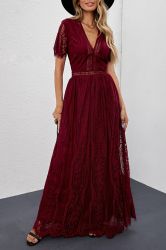
A red midi dress with ruffles, for example, can be styled in several different ways.
For an everyday look:
dress + ankle boots + small handbag.
For a more elegant occasion:
dress + heels + minimalist jewelry.
For an autumn look:
dress + long coat + boots + brown or black handbag.
One dress can be much more versatile than it may seem at first.
6. Use a Third Layer to Transform the Entire Outfit
If you already have a basic combination but it feels a little boring, you don't necessarily need to change everything.
Add a third layer.
This can be:
- a jacket;
- a blazer;
- a cardigan;
- a shirt;
- a coat;
- a trench coat.
A third layer adds structure and visual interest to an outfit.
Beige Jacket with Geometric Print
A beige jacket with a geometric print, for example, can transform even a simple top + jeans combination into a much more complete look.
Easy formula:
basic piece + jeans/trousers + interesting jacket + shoes.
This is one of the easiest ways to make an outfit more interesting.
7. If You Don't Know Which Cut You Like, Compare Different Silhouettes
Instead of buying five pieces in exactly the same style, try comparing different silhouettes.
For example:
straight cut → relaxed fit → fitted cut → oversized.
This will help you understand not only what looks good on you, but also what you actually feel good wearing.
That's important because a piece can look amazing visually, but if you're constantly adjusting, pulling or fixing it, you probably won't wear it very often.
Comfort and proper fit are just as important as the trend itself.
8. Don't Be Afraid of Prints – Just Keep the Rest Simple
If you love colorful clothing but don't know how to combine it, use a very simple rule:
print + clean basics.
Checked Shirt Jacket with Multicolor Patchwork
A checked shirt jacket with multicolor patchwork can be the main statement piece of the outfit.
Instead of adding another printed item, combine it with:
- a solid-color top;
- jeans;
- black trousers;
- a simple skirt;
- understated shoes.
This keeps the print as the focus without making the outfit look overwhelming.
9. Use Colors to Discover What You Like
You don't need to immediately know which colors are “your colors.”
Try a small experiment.
Choose three groups:
Neutrals:
beige, white, black, grey
Warm tones:
brown, burgundy, orange, terracotta
Fresher shades:
green, blue, purple, pink
Then see which group makes you feel the most confident.
You can start with a neutral base and add one color as an accent.
For example:
beige trousers + white blouse + burgundy handbag.
Or:
black trousers + cream sweater + green jacket.
This is much easier than trying to combine five bright colors at once.
10. Create 3 Ready-to-Wear Outfit Formulas
If you find yourself wondering what to wear every morning, one of the best solutions is to create a few personal outfit formulas that always work.
For example:
Formula No. 1 – Everyday
jeans + solid-color top + jacket + sneakers/ankle boots
Formula No. 2 – Feminine
dress + boots + handbag + outerwear
Formula No. 3 – Elegant
trousers + blouse/shirt + blazer + shoes
Then simply change the colors and individual pieces.
This approach is practical because you don't have to create a completely new outfit every day. The idea of building a versatile wardrobe through repeatable combinations and easy-to-style basics is widely used in modern styling.
🤎 Bonus: How to Know Whether a Piece Is Really “You”
Before buying a piece, ask yourself these 5 questions:
1. Can I combine it with at least 3 things I already own?
2. Do I feel comfortable wearing it?
3. Do I like the way it looks on me, not just the way the garment itself looks?
4. Can I wear it for at least two different occasions?
5. Would I wear it again a month from now?
If the answer is “yes” to most of these questions, you've probably found a good choice.
What to Wear When You Don't Know What Suits You?
The truth is that there is no single perfect piece that looks good on every woman.
And that's exactly what makes fashion interesting.
Instead of looking for the “right” body shape or the “perfect” garment, start paying attention to:
- how the cut fits;
- where the waistline falls;
- how long the piece is;
- how the fabric moves;
- which colors you like on yourself;
- how you feel in the garment;
- what you can combine it with.
And most importantly – you don't have to fit into a particular category to look stylish.
A great outfit is one that looks intentionally put together and makes you feel confident.
And if you open your wardrobe today and once again think “I have nothing to wear”, start with just one piece. Choose it, add a neutral basic, one interesting accent and the right shoes.
Sometimes, that's all it takes.