

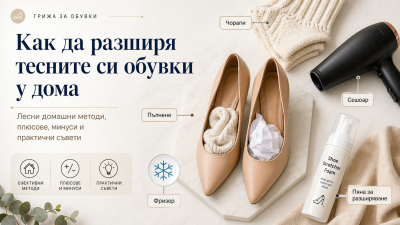
Tight shoes are a common problem, especially when they are new. Sometimes the material simply has not softened yet, and other times the shoe feels tight in a specific area - around the toes, the bunion, or the sides. The good news is that there are several ways to try to loosen them at home. It is important to know, however, that these methods help mainly when the shoes are tight in width. If they are too short, home tricks will not solve the problem.
1. Wearing them at home with thicker socks
This is the easiest and safest home option. You put on thicker socks and wear the shoes at home for a short time - first 10 to 15 minutes, then a little longer.
Pros:
- easy and free
- gentle on the shoes
- suitable for slight tightness
Cons:
- the effect is slow
- it does not help much if the shoes are seriously tight
- with very stiff shoes, there may be almost no result
This is a good first option if the shoes are only slightly tight.
2. Gradually wearing them for short periods
Sometimes the best solution is simply patience. Instead of wearing the shoes for a long time and causing yourself pain, it is better to wear them at home for short periods over several days.
Pros:
- the gentlest method
- the shoe naturally adapts to the shape of your foot
- there is no risk of damage if you do not overdo it
Cons:
- it takes time
- it is not enough for stiffer or very tight shoes
This option is good for leather shoes that have a chance to loosen slightly.
3. Gentle heating with a hairdryer
This is a popular home method. The idea is to gently warm the shoes while wearing them, usually with socks on, so the material becomes a little more flexible.
Pros:
- it can give a quick effect
- it is useful if the shoes are tight in a specific spot
Cons:
- it carries a risk for the material
- too much heat can dry out the leather or affect the glue
- it is not a good idea for more delicate or more expensive shoes
You need to be very careful here. If you try it, use moderate heat and do it only briefly.
4. The stuffing and stretching method
Some people put socks, paper, or other soft materials inside the shoes so they stay slightly stretched for a few hours or overnight.
Pros:
- easy to try
- does not require special products
- may help with very slight tightness
Cons:
- the effect is often weak
- if overdone, the shoe may become deformed
- it does not work well with stiffer models
This is more of a supporting method than a main solution.
5. The freezer trick
This is one of the best-known home tricks - bags of water inside the shoes, then putting them in the freezer.
Pros:
- it sounds easy
- sometimes it gives results
Cons:
- there is a risk of moisture and stains
- it may stretch the shoe unevenly
- it is not a good choice for delicate materials
Honestly, this is not the safest option, especially if the shoes are nice and you do not want to risk damaging them.
6. Special foam for stretching shoes
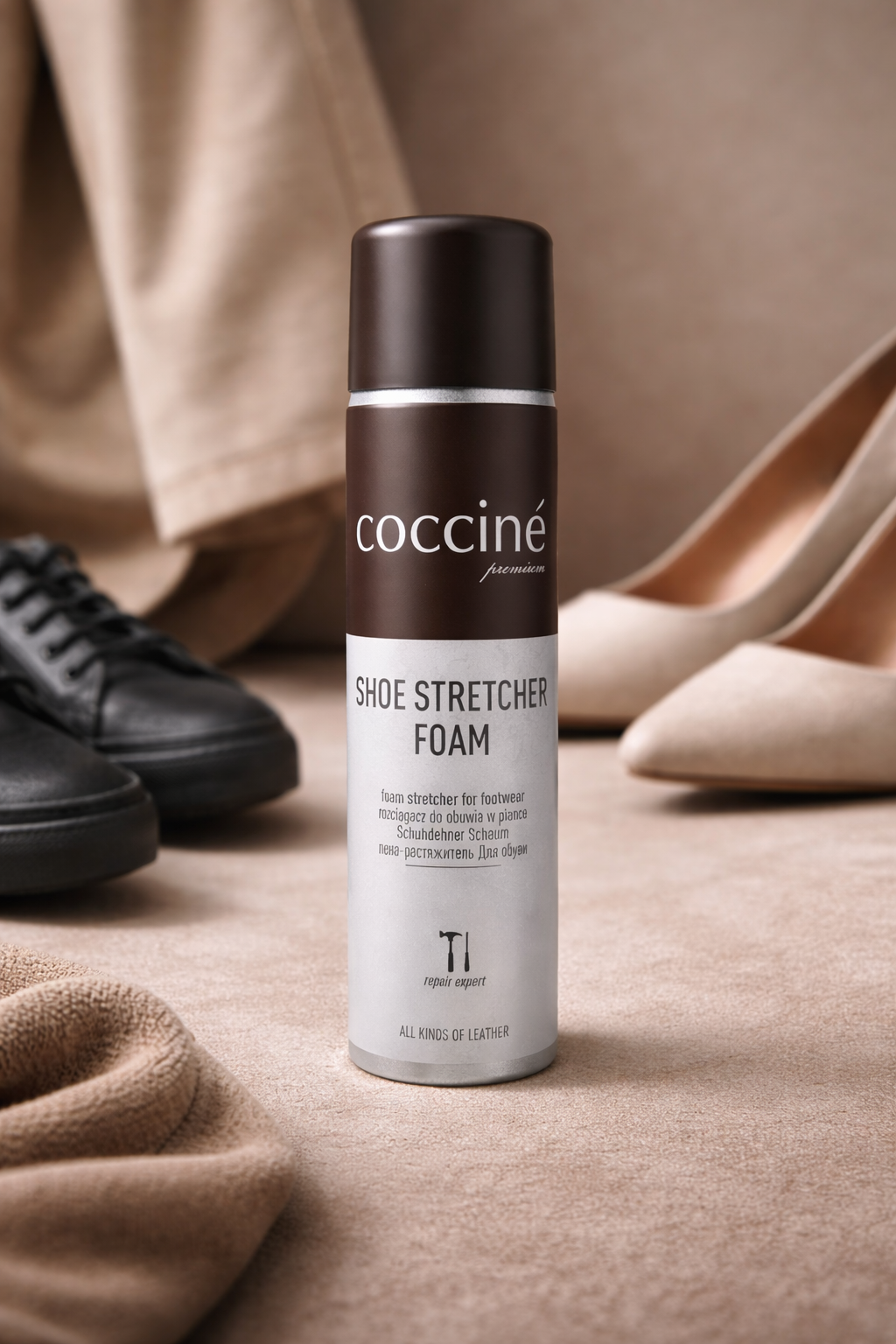
Besides home tricks, there is also a more practical option - a special product for stretching shoes, such as Coccinè Shoe Stretcher Foam. It is made exactly for cases where the shoe feels tight and needs to loosen slightly. It is applied on the inside, and then the shoes are worn so they can shape themselves to the foot.
Pros:
- made specifically for this purpose
- useful for shoes that feel tight in a specific area
- a more controlled option than random home tricks
- can be repeated if needed
Cons:
- it will not work miracles if the shoe is too small
- it still needs to be used carefully depending on the material
- it requires buying a separate product
This is a good option if you want something more targeted than home methods, but without going to a cobbler.
Which option is best
If the shoes are only slightly tight, start with the gentlest method - thicker socks and wearing them at home for short periods. If that does not help enough, you can try a more targeted option. If the shoes feel tight in a specific spot and you want a more practical solution, then the foam is a logical next step.
What not to do
- Do not soak the shoes too much.
- Do not place them on a radiator.
- Do not use excessive heat.
- Do not force-stretch them with hard objects.
- Most importantly, do not expect a home method to fix a shoe that is actually too small in size.
Conclusion
Tight shoes do not always mean you have to give up on them right away. If they are only slightly tight, there are several ways to loosen them at home. The most sensible approach is to start with the gentler methods and only then move on to more targeted solutions. This way, the chance of making the shoes more comfortable is higher, and the risk of damaging them is lower.